International Doesn't Always Mean Suitable: Choosing Accounting Software for an OHADA Business

In today's business environment, accounting software has become an essential tool for managing financial information. Businesses can choose from hundreds of solutions offering invoicing, expense management, inventory, payroll, reporting, automation and even artificial intelligence.
But there is an important question that is often overlooked: Is the software actually suited to the accounting environment in which your business operates?
A software can be globally recognized, powerful and feature-rich—and still not be the most suitable solution for a business operating within the OHADA accounting environment.
Accounting Is More Than Recording Numbers
At its core, accounting involves recording, classifying, summarizing and reporting financial transactions. But the way these activities are performed is influenced by the accounting framework applicable to a business.
For businesses operating within the OHADA space, accounting is governed by the OHADA accounting framework, including the revised SYSCOHADA. This means that an accounting system should do more than simply capture transactions. It should support the accounting structures, principles and reporting requirements relevant to the environment in which the business operates.
This is where the difference between general-purpose accounting software and software designed with a specific accounting environment in mind becomes important.
A Powerful Software Can Still Require Adaptation
Imagine purchasing an internationally popular accounting system. It may offer:
- Invoicing
- Sales and purchases
- Inventory management
- Payroll
- Expense tracking
- Bank reconciliation
- Financial reporting
- Business analytics
On paper, it looks impressive. But what happens when the system's account structure, reporting formats or workflows do not naturally correspond with the accounting requirements of your business?
You may find yourself creating workarounds, maintaining additional spreadsheets, manually adjusting reports or relying heavily on your accountant to bridge the gap. The software is powerful. But is it appropriate? That is an entirely different question.
International Recognition vs. Local Relevance
There is nothing inherently wrong with international accounting software. In fact, many global platforms are exceptionally well developed. The issue is fit. A system designed for one accounting and regulatory environment may require significant localization before it becomes practical in another.
This is why businesses should not evaluate accounting software based solely on feature count or brand recognition. A better question is: “How well does this software fit the accounting environment in which my business operates?”
What Should an OHADA Business Consider?
Before adopting an accounting system, businesses should consider key questions:
- Does the software support the appropriate accounting framework?
- Does its account structure align with the needs of the business?
- Can it produce the relevant financial information and reports?
- Can it accommodate local business and regulatory realities?
- Does it integrate important processes such as sales, purchases, inventory, payroll and banking?
- How much manual adjustment will be required?
- Can the system evolve as accounting and regulatory requirements change?
These questions shift the conversation from “Which software is most popular?” to “Which software is most appropriate for us?”
The Real Meaning of Computerized Accounting
Computerizing accounting should not simply mean moving from paper records or Excel spreadsheets to a digital platform. The real value comes when technology helps businesses organize, process and report financial information within the accounting environment they operate in.
The objective should not be to force an accountant to adapt every accounting process around a software system. Ideally, the technology should be designed to support the accounting processes and realities of the business.
This Is Where Local Context Matters
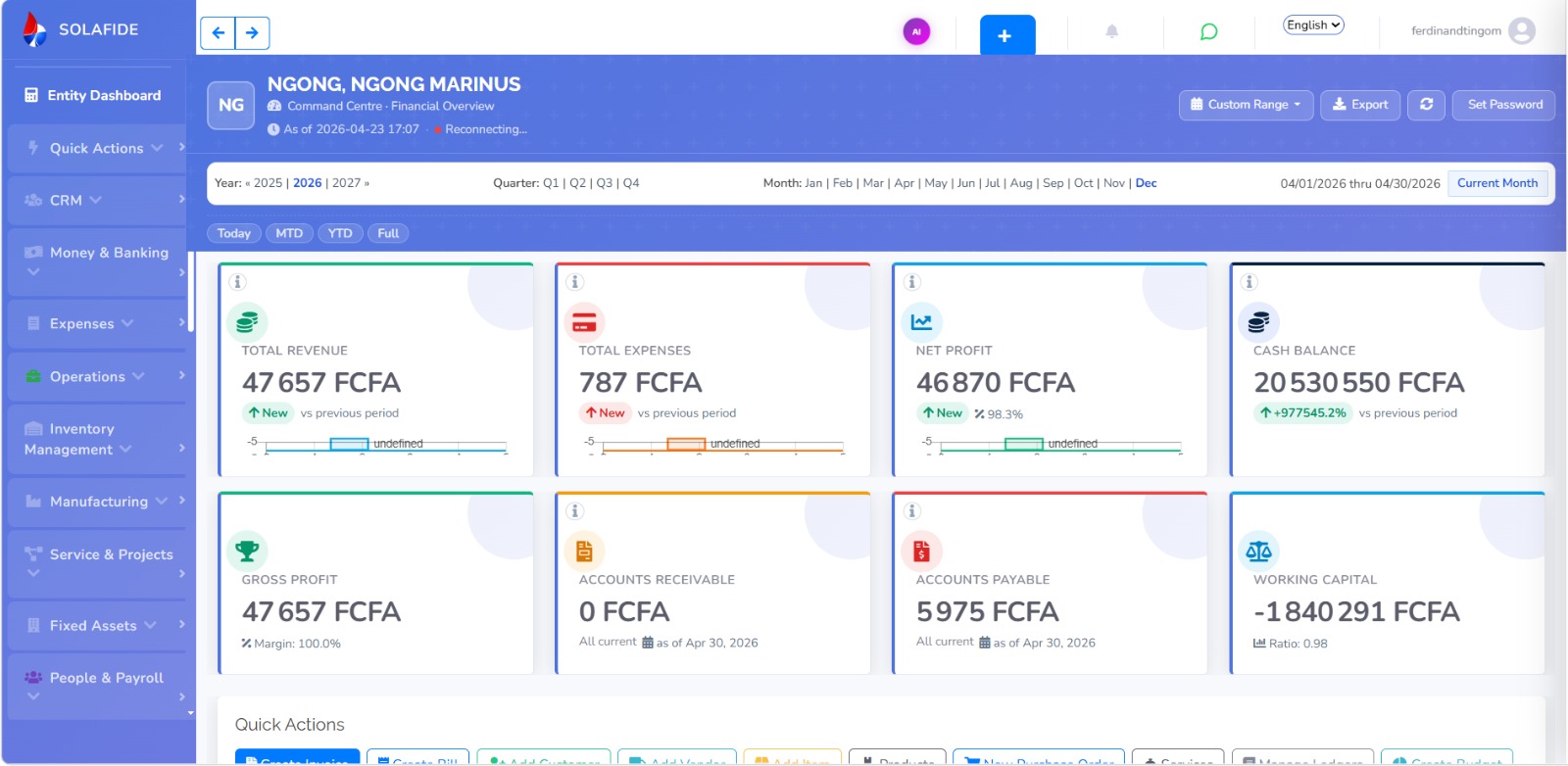
This thinking is part of the philosophy behind Solafide Accounting Software. Solafide was developed with the realities of businesses operating within the OHADA environment in mind—bringing accounting, business processes and technology together in one system.
The goal is not simply to provide another software with a long list of features. It is to provide technology that is relevant to the environment in which businesses actually operate. Because ultimately: the best accounting software isn't necessarily the one with the most features. It is the one that makes sense for your accounting environment.
A Question for Accountants and Business Owners:
If you were choosing accounting software today, what would influence your decision more—international recognition, or how well the software fits your local accounting environment?
Follow Solafide for more practical insights on OHADA accounting, computerized accounting and accounting technology.