Why Great Software Starts With Listening: The Importance of Customer Validation

In software engineering, there is a natural temptation to start with what developers do best: writing code. You identify a problem, imagine a solution, architect the system, and immediately begin building. But great software is not simply about functional code; it is about solving a real operational pain point for real people.
The difference between a system that thrives in the market and one that gets abandoned often comes down to one question: Did the engineering team truly take the time to listen?
Identifying a Problem ≠ Understanding the Problem
A business owner might say, “I need better accounting software.” At first glance, that sounds straightforward. But what does “better” actually mean?
- Does the company need deeper financial reporting?
- Is the bottleneck inventory tracking and stock management?
- Do they need faster access to operational cash flow figures?
- Or is the current system functional, but so frustrating that employees refuse to use it correctly?
Initial requests are usually surface-level symptoms. Uncovering the real problem requires digging deeper through active customer validation.
Why Customer Validation Matters
Customer validation forces developers to test assumptions before sinking capital and time into engineering features that nobody wants. Instead of asking, “What can we build?” product teams must ask, “What specific obstacle are you experiencing every day?”
Through direct customer conversations, development teams expose:
- Critical operational pain points previously overlooked;
- Regulatory and reporting nuances (such as specific SYSCOHADA compliance requirements);
- Workflows that need simplification rather than added technical complexity;
- Manual tasks that users forgot to explicitly request in product specs.
Functionality vs. Daily User Experience
Engineers and end-users evaluate software through fundamentally different lenses:
| Developer Perspective | Customer Experience |
|---|---|
| “Does this feature execute correctly?” | “Can I complete this task quickly and easily?” |
| “The financial data is stored in the database.” | “Can I extract this balance sheet in two clicks during an audit?” |
| “The backend API performance is fast.” | “Is the UI clear enough for a non-accountant to navigate?” |
A technically brilliant solution will still fail if the user experience creates friction in day-to-day operations.
From Assumptions to Validation
A resilient product development workflow follows a clear loop:
Listen → Understand → Validate → Build → Test → Refine
This does not mean developers blindly copy every customer feature request. Software builders bring technical architecture and systemic problem-solving; customers bring domain experience and operational reality. The strongest products emerge at the intersection of these two strengths.
The Solafide Approach: Built for the Real World
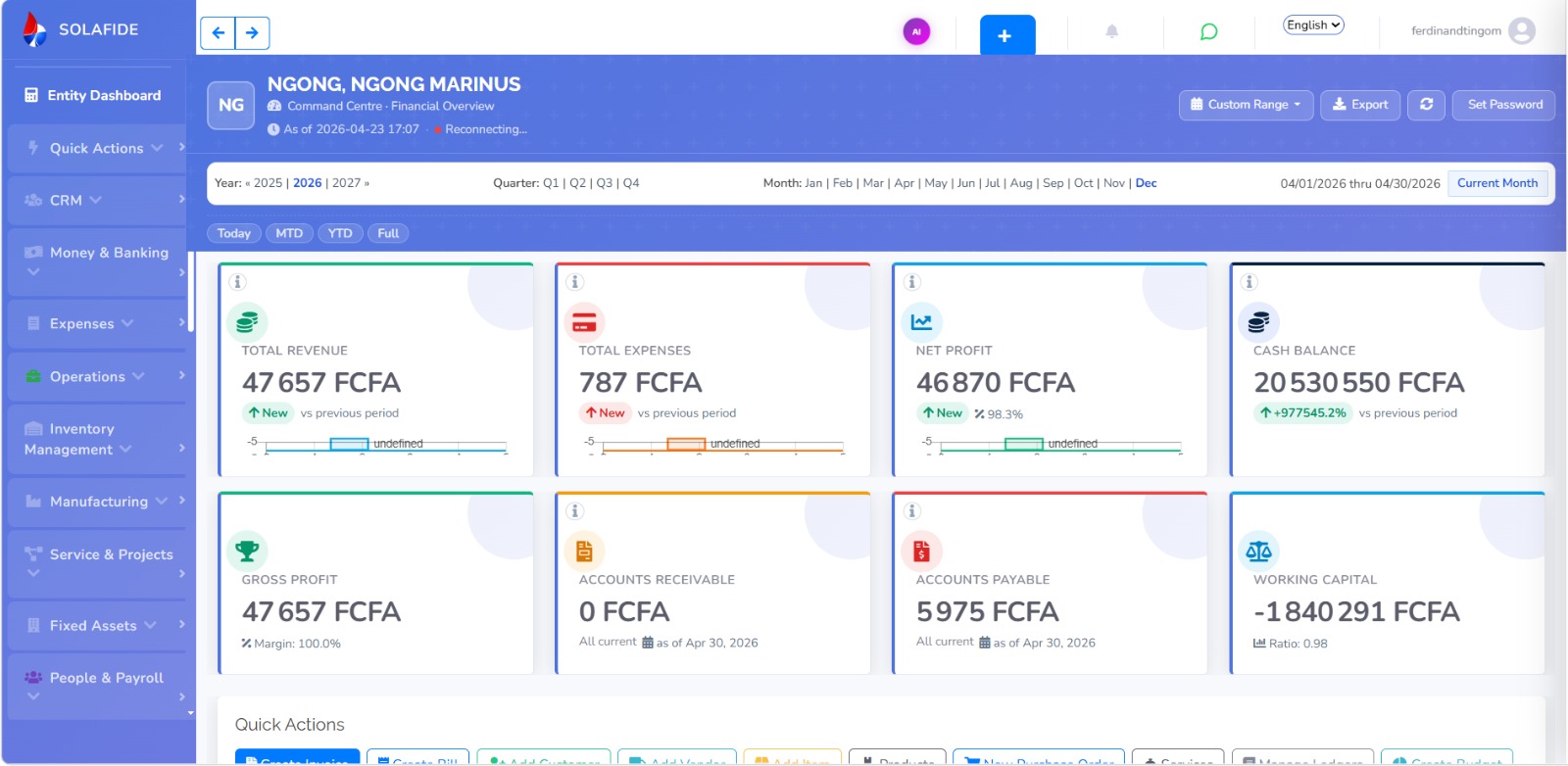
Developing enterprise systems like Solafide Accounting Software for businesses in the OHADA region demands more than theoretical compliance. It requires understanding how accountants, cashiers, and managers actually interact with ledgers, invoices, and tax filings in fast-paced local environments.
Great software does not begin with coding—it begins with listening.
What has been your experience with software adoption? Have you ever used a tool that looked impressive on paper but failed to meet actual day-to-day operational needs?